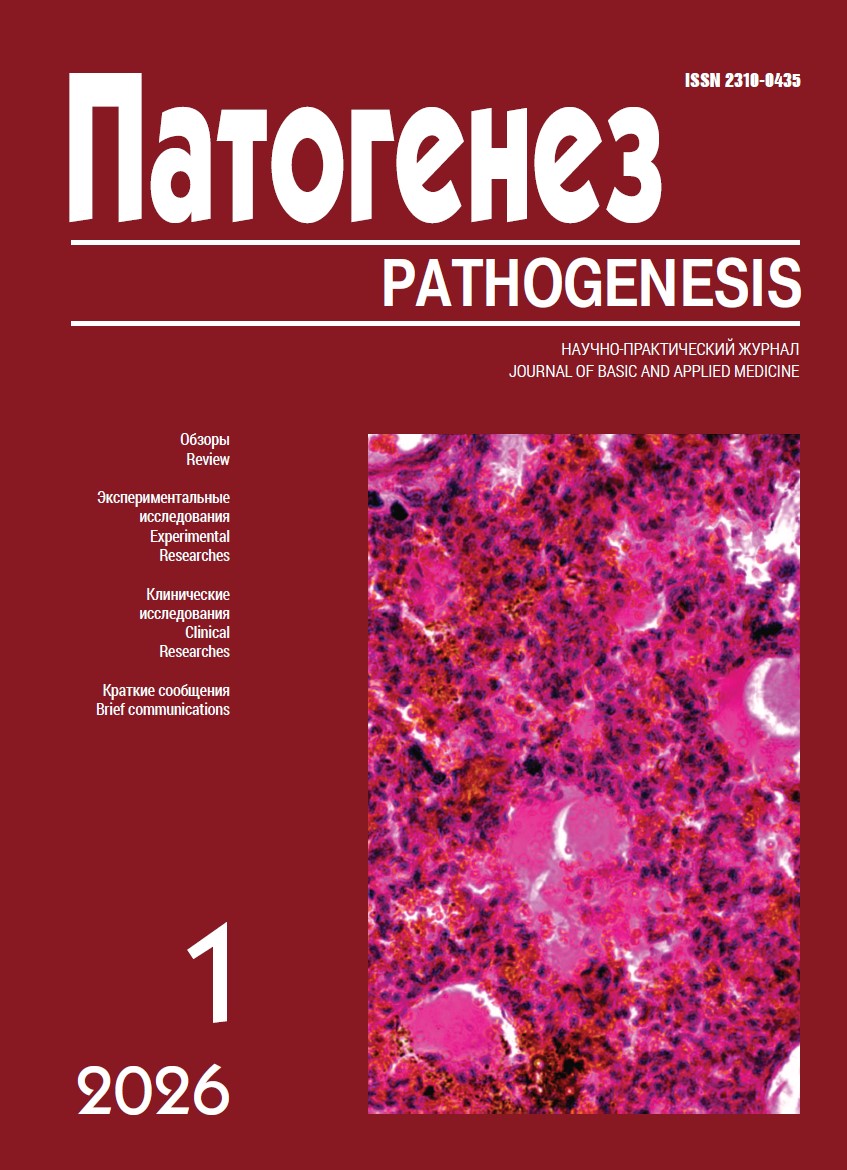
Comparative analysis of morphological changes in lung tissue under conditions of norepinephrine and vasopressin model of pulmonary edema
DOI:
https://doi.org/10.48612/path/2310-0435.2026.01.41-48Keywords:
pulmonary edema, noradrenaline, terlipressin, histomorphometry, ratAbstract
Cardiogenic pulmonary edema (PE) is characterized by high mortality, and elucidating the mechanisms of its development is a crucial step in creating effective therapeutic methods. This is facilitated by identifying the structural changes in the lung parenchyma during its development.
The aim of the study was to assess morphological changes in the lung parenchyma in models of the hemodynamic form of pulmonary edema.
Materials and methods: The study was performed on 60 anesthetized male Wistar rats aged 16-18 weeks. They were intravenously administered a single dose of normal saline (n = 20), norepinephrine at a dose of 500 mcg/kg (n = 20), or terlipressin at a dose of 400 mcg/kg (n = 20). Fifty minutes after drug administration, the lungs were extracted and subjected to gravimetry. Paraffin-embedded histological sections were prepared from the caudal lobe of the left lung, stained with hematoxylin and eosin, and morphometry of the parenchymal structures was performed on digital images.
Results: As a result, it was found that the administration of norepinephrine leads to the development of PE due to an equal increase in lung blood filling and water content, while the administration of terlipressin leads to the development of PE due to the predominance of water content over blood filling. After norepinephrine administration, a significantly larger area of the lung parenchyma exhibited verified signs of interstitial edema and alveolar edema. In animals administered norepinephrine and terlipressin, increased cellular infiltration was detected in the lung parenchyma, manifested as accumulations of leukocytes, erythrocytes, and mast cells with foci of plasmatic impregnation; the lumens of some alveoli contained acellular eosinophilic content. After norepinephrine administration, alveoli not containing fluid had significantly smaller sizes and thicker interalveolar septa.
Conclusion: Thus, systemic administration of norepinephrine and terlipressin induces pulmonary edema, which is verified by both gravimetric and histomorphometric analyses. The development of norepinephrine-induced pulmonary edema is accompanied by increased lung blood filling and water content, with the development of congestion in the pulmonary capillaries due to hemodynamic disturbances. The development of terlipressin-induced pulmonary edema is accompanied by increased lung hydration due to increased permeability and fluid retention.